
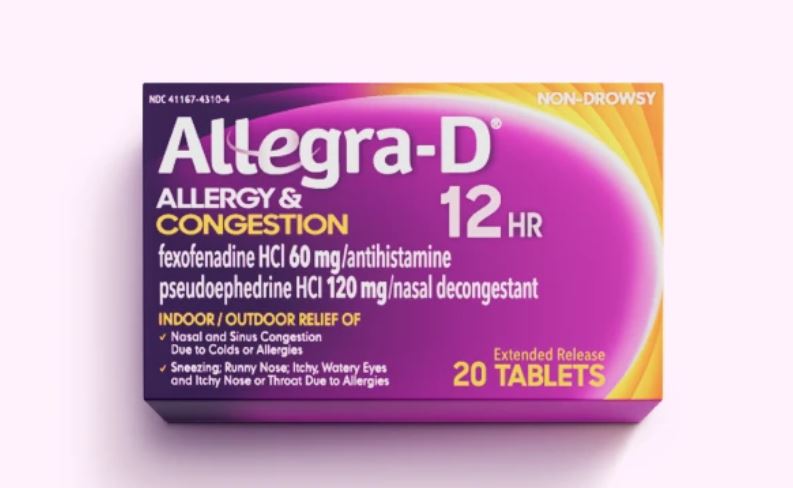
Allegra-D: The Essential Reference Guide
1. What Is Allegra-D?
Allegra-D is a medicine used to treat allergy symptoms and nasal congestion at the same time. People often take it when they have:
- Stuffy or blocked nose
- Sneezing
- Itchy or watery eyes
- Runny nose
It is called a combination medicine because it contains two active ingredients:
- Fexofenadine
- Pseudoephedrine
One ingredient treats allergy symptoms. The other clears nasal congestion. Together, they provide stronger relief than a single-ingredient allergy pill.
Allegra-D is especially helpful during pollen season, but it can also help with year-round allergies.
2. How Does Allegra-D Work?
Allegra-D works in two different ways because it has two active ingredients.
Fexofenadine – The Antihistamine
Fexofenadine is an antihistamine. When your body reacts to allergens like pollen, dust, or pet dander, it releases a chemical called histamine. Histamine causes symptoms such as:
- Sneezing
- Itchy eyes
- Runny nose
- Watery eyes
Fexofenadine blocks histamine. This reduces allergy symptoms and helps you feel more comfortable.
Unlike some older antihistamines, fexofenadine usually does not cause drowsiness in most people.
Pseudoephedrine – The Decongestant
Pseudoephedrine works differently. Allergies can cause swelling inside the nose. This swelling blocks airflow and creates pressure in the sinuses.
Pseudoephedrine shrinks the swollen blood vessels in the nasal passages. This helps:
- Open up the nose
- Reduce sinus pressure
- Improve breathing
Because pseudoephedrine can be misused, Allegra-D is often kept behind the pharmacy counter in many countries.
3. What Is Allegra-D Used For?
Allegra-D is mainly used for allergies that include nasal congestion.
It may help with:
- Seasonal allergic rhinitis (hay fever)
- Year-round indoor allergies
- Dust allergy
- Pet allergy
- Mould allergy
- Sinus pressure caused by allergies
It is not meant to treat infections. It does not cure allergies. It only helps control symptoms while you are exposed to triggers.
4. Types of Allegra-D
There are usually two main versions available.
Allegra-D 12 Hour
- Taken twice daily
- Provides relief for about 12 hours
- Often used during the daytime
Allegra-D 24 Hour
- Taken once daily
- Provides all-day relief
- Good for people who want fewer doses
Your doctor or pharmacist can help you choose the right option based on your symptoms.
5. How to Take Allegra-D Correctly
To use Allegra-D safely:
- Follow the directions on the label.
- Swallow the tablet whole. Do not crush or chew it.
- Take it with water.
- Do not take more than recommended.
Helpful Tips
- Avoid taking it late at night because pseudoephedrine may make it hard to sleep.
- Do not combine it with other decongestants.
- Read labels carefully if you are taking other cold or allergy medicines.
Because it contains pseudoephedrine, you may need to show identification when buying it from a pharmacy.
6. Possible Side Effects
Most people tolerate Allegra-D well, but side effects can happen.
Common Side Effects
- Trouble sleeping
- Dry mouth
- Headache
- Dizziness
- Feeling nervous
Less Common but Serious Side Effects
- Fast heartbeat
- Increased blood pressure
- Severe dizziness
- Allergic reaction
Seek medical help immediately if you experience chest pain, trouble breathing, or swelling of the face or throat.
7. Who Should Avoid Allegra-D?
Allegra-D is not suitable for everyone. Talk to a healthcare professional before using it if you have:
- High blood pressure
- Heart disease
- Thyroid problems
- Glaucoma
- Diabetes
- Enlarged prostate
It may also not be recommended for:
- Young children
- Pregnant women
- Breastfeeding mothers
Always ask a doctor or pharmacist if you are unsure.
8. Allegra-D vs Regular Allegra
There is often confusion between Allegra-D and regular Allegra.
Regular Allegra contains only fexofenadine.
Allegra-D contains:
- Fexofenadine
- Pseudoephedrine
Regular Allegra may suffice if your symptoms only include sneezing and itchy eyes.
If you also have a blocked or stuffy nose, Allegra-D may provide better relief.
9. Drug Interactions
Allegra-D can interact with other medicines.
Be careful if you are taking:
- Blood pressure medications
- Other decongestants
- Stimulants
- Certain antidepressants
Always inform your doctor about all medications and supplements you are using.
Also, avoid drinking large amounts of fruit juice (such as orange, apple, or grapefruit juice) when taking fexofenadine. These juices can reduce how well it works.
10. Storage Instructions
To keep Allegra-D effective:
- Store at room temperature.
- Keep it away from moisture.
- Keep it out of reach of children.
- Do not use it after the expiration date.
Proper storage ensures the medicine works when needed.
11. Is Allegra-D Addictive?
Allegra-D is not addictive when used as directed.
However, pseudoephedrine is controlled in many places because it can be misused. That is why pharmacies monitor its sale.
Use only the recommended dose. Do not increase the amount on your own.
12. Can You Take Allegra-D Daily?
Some people use Allegra-D daily during allergy season.
However, long-term use of pseudoephedrine may:
- Raise blood pressure
- Increase heart rate
- Cause sleep problems
Doctors usually suggest using it for short periods or during severe congestion. If you need daily allergy control, your doctor may recommend a different treatment plan.
13. Natural Ways to Reduce Allergy Symptoms
Medicine helps, but lifestyle changes can also make a big difference.
You can:
- Keep windows closed during high pollen days.
- Use air filters in your home.
- Wash bedding weekly in hot water.
- Shower after spending time outdoors.
- Avoid known allergy triggers.
These simple steps may reduce the need for stronger medication.
FAQs
1. What is Allegra-D mainly used for?
It is used to treat allergy symptoms such as sneezing, runny nose, itchy eyes, and nasal congestion.
2. Does Allegra-D make you sleepy?
Fexofenadine usually does not cause sleepiness. However, pseudoephedrine may cause nervousness or restlessness.
3. Can I take Allegra-D at night?
It is not recommended. The decongestant may make it hard to fall asleep.
4. Do I need a prescription?
In many places, you do not need a prescription. However, you must request it at the pharmacy counter and show identification.
5. Is it safe if I have high blood pressure?
It may not be safe because pseudoephedrine can raise blood pressure. Consult your doctor first.
6. How quickly does it work?
Many people feel relief within one to two hours after taking a dose.
7. Can children take Allegra-D?
It depends on the child’s age and the strength of the product. Always check with a doctor before giving it to children.
8. Can I drink coffee while taking it?
Coffee contains caffeine, which is a stimulant. Since pseudoephedrine is also a stimulant, combining it with other stimulants may increase nervousness or a fast heartbeat.
9. What if I miss a dose?
Take it when you remember. If it is almost time for your next dose, skip the missed one. Do not take two doses at the same time.
10. Is Allegra-D the best allergy medicine?
It depends on your symptoms. If congestion is your main problem, Allegra-D may work better than an antihistamine alone.
Conclusion
Allegra-D is an effective combination medicine that treats both allergy symptoms and nasal congestion. By combining Fexofenadine and Pseudoephedrine, it offers relief from sneezing, itchy eyes, runny nose, and sinus pressure.
It works well during seasonal allergies and for people who struggle with blocked nasal passages. However, it is not suitable for everyone, especially those with high blood pressure or heart conditions.